

Manufacturing has long been the backbone of industrial economies, representing the process by which raw materials are transformed into finished goods. From the humble beginnings of hand-crafted tools to the modern-day precision engineering of smartphones, automobiles, and advanced machinery, manufacturing has been instrumental in shaping the world we live in. The sector has undergone profound transformations over the centuries, driven by technological advancements, shifts in consumer demands, and the changing nature of global markets. Today, manufacturing is more than just a means of production; it is an intricate, highly specialized system that integrates technology, logistics, and a global workforce. As the world moves further into the 21st century, the future of manufacturing seems poised for even greater innovation, sustainability, and complexity.
Historically, manufacturing began as a labor-intensive activity where skilled artisans crafted products by hand. In the pre-industrial era, the production of textiles, pottery, metal goods, and tools was primarily localized, with small workshops or individual artisans meeting the needs of their communities. With the advent of the Industrial Revolution in the late 18th century, manufacturing underwent a seismic shift. The introduction of mechanized processes, powered by steam engines and later electricity, ushered in an era of mass production. Industries such as textiles, iron, and coal rapidly expanded, creating the foundation for the modern industrial economy. It was during this time that the assembly line concept, first popularized by Henry Ford in the early 20th century, revolutionized production, allowing for faster, more efficient manufacturing of goods at a scale never before seen.
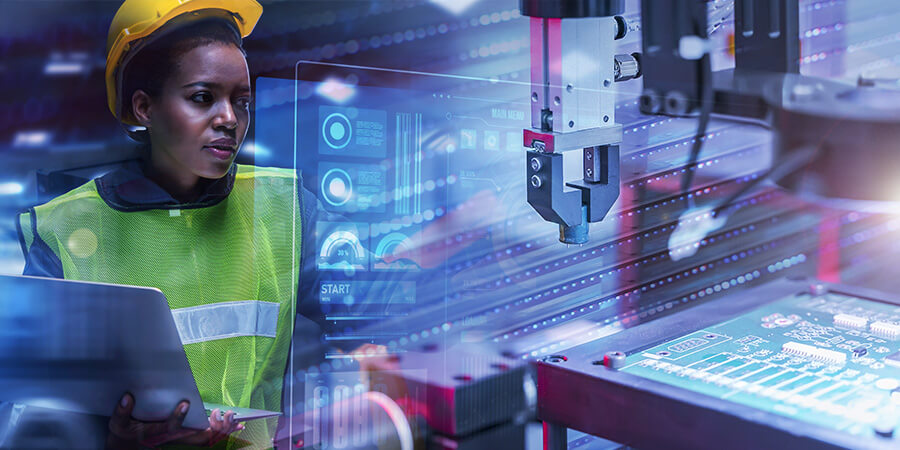
Fast forward to today, and manufacturing has become far more sophisticated, embracing the latest advancements in technology and automation. In modern manufacturing environments, efficiency is paramount, and this has led to the widespread adoption of digital technologies such as robotics, artificial intelligence (AI), and the Internet of Things (IoT). These technologies have not only improved the speed and precision of production but have also led to the development of “smart factories”—facilities where machines and systems communicate with each other, collect and analyze data in real time, and optimize production processes autonomously. Smart manufacturing has made it possible to create highly complex products in less time, with fewer errors, and at lower costs.
The rise of Industry 4.0, as this digital transformation is often called, has dramatically changed the manufacturing landscape. Industry 4.0 refers to the fourth industrial revolution, which integrates cyber-physical systems into manufacturing, along with automation, data exchange, and cloud computing. In practical terms, this means that factories are becoming more connected and intelligent, capable of making real-time decisions based on large sets of data. Sensors embedded in machines monitor their performance, providing insights into wear and tear, allowing companies to predict when maintenance is needed and prevent costly downtime. In turn, these innovations lead to more efficient use of resources, reduced waste, and improved overall productivity.
One of the key advantages of modern manufacturing is its ability to produce customized products on a large scale. In the past, mass production was largely focused on making identical products, with little regard for individual preferences. Today, however, the demand for personalized and customizable goods is on the rise. This has led to the development of flexible manufacturing systems (FMS), which enable manufacturers to switch between product lines quickly without significant downtime. For example, in the automotive industry, manufacturers can now produce cars in different configurations with varying colors, features, and designs, all while maintaining high levels of efficiency and cost-effectiveness. 3D printing, or additive manufacturing, has also emerged as a game-changer in this regard, allowing for the rapid prototyping and production of customized parts and products with intricate designs that would be impossible to achieve using traditional methods.
Despite the many advances in manufacturing, the sector faces a number of challenges, particularly in the areas of sustainability and labor. Manufacturing, especially in industries such as steel, chemicals, and textiles, has long been associated with significant environmental impacts, including carbon emissions, pollution, and resource depletion. As global awareness of environmental issues grows, there is increasing pressure on manufacturers to adopt more sustainable practices. This has led to the rise of “green manufacturing” practices, which focus on reducing energy consumption, minimizing waste, and utilizing renewable resources. Companies are investing in cleaner technologies, recycling systems, and alternative energy sources such as solar and wind power to reduce their environmental footprint.
One notable example of sustainability in manufacturing is the shift toward circular economy principles. In a traditional linear economy, products are made, used, and then discarded, contributing to a growing waste problem. In contrast, a circular economy seeks to keep products in use for as long as possible, through practices like reusing, recycling, and refurbishing. Companies like Patagonia and IKEA are leading the charge by designing products with longer lifespans and promoting take-back programs that allow consumers to return products at the end of their life cycle for refurbishment or recycling. By embracing circular manufacturing, companies not only help conserve resources but also reduce the environmental impact of their operations.
Labor, too, plays a critical role in the future of manufacturing. While automation and AI have undeniably improved efficiency, they have also raised concerns about job displacement. As robots take on more repetitive and dangerous tasks, there is a growing need for a workforce that is skilled in digital technologies, robotics, and data analysis. Manufacturers are increasingly investing in training and upskilling programs to ensure that workers are prepared for the evolving demands of the industry. The challenge lies in balancing automation with the need for human labor, ensuring that jobs are not lost but rather transformed into higher-skilled, higher-value roles that complement technological advancements.
Moreover, the globalization of manufacturing has led to new challenges and opportunities. As companies seek to optimize production costs, many have turned to outsourcing and offshoring, setting up factories in countries with lower labor costs. However, recent shifts in global trade dynamics, such as tariffs, trade wars, and the disruptions caused by the COVID-19 pandemic, have exposed the vulnerabilities of global supply chains. In response, some manufacturers are reshoring or nearshoring production, bringing operations closer to home to reduce risks associated with distant supply chains and take advantage of emerging technologies that make local production more feasible.
The future of manufacturing looks to be increasingly characterized by innovation, sustainability, and flexibility. As new technologies continue to evolve, manufacturers will be able to produce even more sophisticated products with greater precision, while also minimizing environmental impact. The growth of artificial intelligence and machine learning will enable even greater levels of automation, driving productivity while reducing human error. Meanwhile, as consumer preferences continue to lean towards sustainability and customization, manufacturers will be required to adopt more adaptive and environmentally conscious practices.
In conclusion, manufacturing has evolved far beyond its roots in the Industrial Revolution, emerging as a highly advanced and intricate sector that blends technology, efficiency, and sustainability. While challenges remain, the opportunities for growth and innovation are vast. The future of manufacturing will be defined by how companies embrace cutting-edge technologies, balance sustainability with productivity, and prepare a workforce for the demands of tomorrow. The ability to innovate, adapt, and collaborate across borders will determine the success of manufacturers in a rapidly changing global economy.