
Sustainability has become a driving force in industries worldwide, and manufacturing is no exception. With rising concerns about energy consumption, material waste, and environmental degradation, manufacturers are facing increased pressure to adopt more eco-friendly practices. A major step toward a greener future lies in the implementation of sustainable design—an approach that prioritizes resource efficiency, waste reduction, and long-term environmental responsibility from the very beginning of the product lifecycle.
Sustainable design in manufacturing focuses on minimizing negative environmental impacts by making intentional choices in materials, processes, and product development strategies. Rather than waiting to address sustainability challenges during or after production, this approach integrates eco-conscious decisions right from the design phase. By doing so, manufacturers can significantly cut down on carbon emissions, decrease material waste, and optimize energy consumption before production even begins.
The evolution of technology plays a key role in supporting sustainable design. Digital tools such as computer-aided design (CAD) software and advanced simulations allow engineers to test different configurations and identify potential inefficiencies before physical production. The Internet of Things (IoT) also contributes to sustainability by enabling smart monitoring systems that track energy usage and reduce unnecessary resource consumption.
Material selection is another crucial factor in sustainable design. Choosing recycled or renewable materials can substantially reduce environmental impact. Additionally, implementing lightweight and high-durability materials enhances product longevity and minimizes the need for frequent replacements, ultimately lowering waste.
Beyond materials, optimizing manufacturing processes can also improve sustainability. Energy-efficient machinery, improved heat management systems, and automation technologies help reduce energy consumption and extend equipment lifespan. For example, integrating high-performance gearboxes into production systems can prevent overheating, reducing energy loss and machinery breakdowns. These strategic innovations lead to long-term cost savings while simultaneously benefiting the environment.
Ultimately, embracing sustainable design is about more than just reducing waste—it’s about reshaping the future of manufacturing for greater efficiency, profitability, and environmental stewardship. By leveraging new technologies and refining design approaches, manufacturers can drive sustainability forward and create a lasting positive impact on both their industry and the planet.
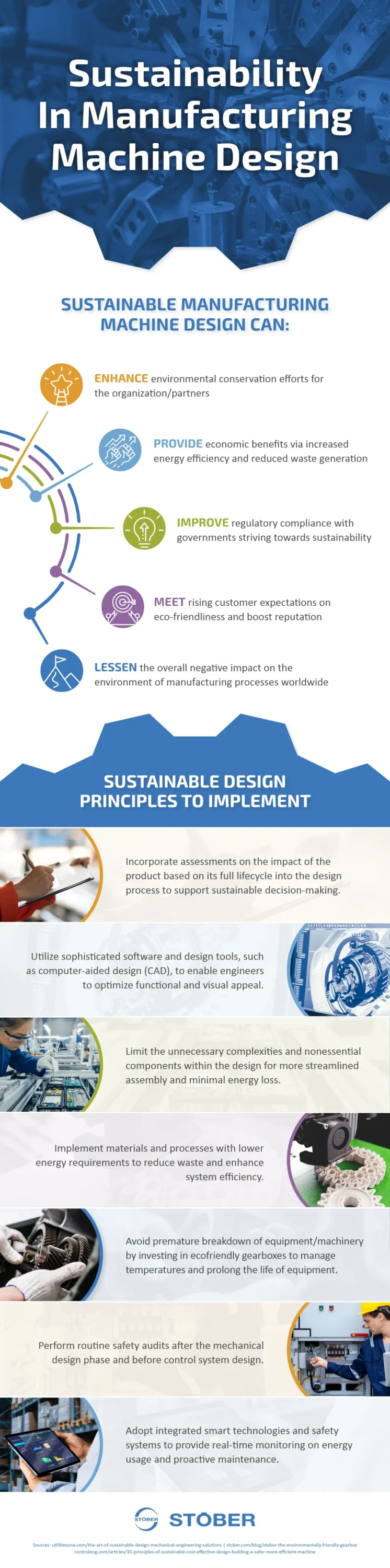
For additional insights into sustainable design strategies in manufacturing, continue reading on to the infographic accompanying this post; courtesy of STOBER, the organization with the rack and pinion drive options you need.