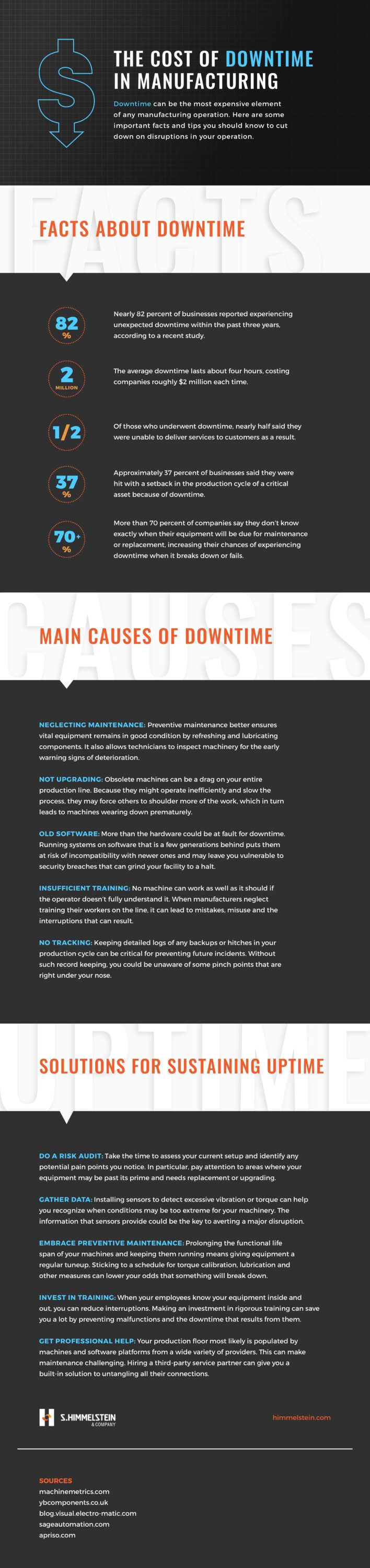


In the fast-paced world of manufacturing, nothing is more costly than unexpected downtime. More than just a temporary halt in production, downtime can have a ripple effect that impacts everything from operational costs to customer relationships. Every minute that a production line is offline translates to lost revenue, wasted resources, and decreased efficiency. However, beyond the immediate financial implications, the hidden costs of downtime can be even more damaging—eroding trust, delaying deliveries, and pushing customers toward competitors who can meet their needs without disruption.
Manufacturers operate on tight schedules with thin margins, making reliability and uptime critical factors for success. While some interruptions may be unavoidable due to external factors like supply chain disruptions or severe weather events, studies show that most downtime incidents stem from preventable issues. Poor maintenance practices, lack of employee training, and inefficient data collection often contribute to small, overlooked problems that eventually escalate into full-scale operational breakdowns.
The Financial Impact of Downtime
Downtime costs extend far beyond lost production hours. When an assembly line or processing unit goes offline, manufacturers may face:
- Lost Revenue – Depending on the industry, an hour of downtime can cost tens of thousands—or even millions—of dollars.
- Higher Labor Costs – Paying employees while they wait for equipment repairs or process restarts leads to financial waste.
- Missed Deadlines – Delays in fulfilling customer orders can lead to canceled contracts, penalties, or lost future business.
- Equipment Damage – Unplanned shutdowns can strain machinery, leading to more frequent breakdowns and higher repair expenses.
- Reputational Harm – Customers who experience repeated delays may lose confidence in your ability to deliver, driving them to seek more reliable suppliers.
Common Causes of Downtime and How to Prevent Them
The majority of downtime incidents can be traced back to avoidable factors. Here are some of the most common causes and proactive steps manufacturers can take to mitigate them:
- Lack of Preventive Maintenance – Regular maintenance is one of the simplest and most effective ways to reduce downtime. Implementing a preventive maintenance program ensures that machinery is serviced and inspected before failures occur, extending equipment lifespan and minimizing disruptions.
- Workforce Training Gaps – Employees who lack proper training are more likely to make errors that lead to equipment malfunctions or production slowdowns. Investing in ongoing training programs ensures that workers can operate machinery correctly, troubleshoot minor issues, and follow best practices for maintaining efficiency.
- Ineffective Data Collection & Analysis – Many manufacturers still rely on reactive approaches to downtime, addressing issues only after they occur. By leveraging real-time data analytics and predictive maintenance technologies, companies can identify potential failures before they happen, allowing for preemptive repairs and process optimization.
- Poor Inventory and Supply Chain Management – A missing part or delayed material shipment can halt production just as effectively as a broken machine. Ensuring that inventory is managed properly and suppliers are reliable helps prevent disruptions due to material shortages.
- Aging Equipment and Outdated Technology – Older machinery is more prone to breakdowns and inefficiencies. While upgrading equipment requires an upfront investment, the long-term benefits of increased reliability, energy efficiency, and lower repair costs make it worthwhile.
The Role of Technology in Minimizing Downtime
Advancements in Industry 4.0 technologies have made it easier than ever for manufacturers to reduce downtime and optimize productivity. Smart sensors, AI-driven predictive maintenance, and IoT-enabled machinery provide real-time insights into equipment performance, allowing businesses to detect and address potential failures before they occur. By integrating automation and data analytics into manufacturing processes, companies can improve efficiency, reduce human error, and maintain continuous production with minimal interruptions.
Final Thoughts
The cost of downtime in manufacturing is too significant to ignore. While some disruptions are inevitable, most can be prevented through proactive maintenance, employee training, data-driven decision-making, and strategic investments in modern technology. Manufacturers that prioritize uptime will not only see increased profitability but also build stronger, more reliable relationships with customers.
For more insights on preventing downtime and keeping your operations running smoothly, check out the accompanying infographic created by S. Himmelstein & Company, one of the industry’s most trusted transducer manufacturers.