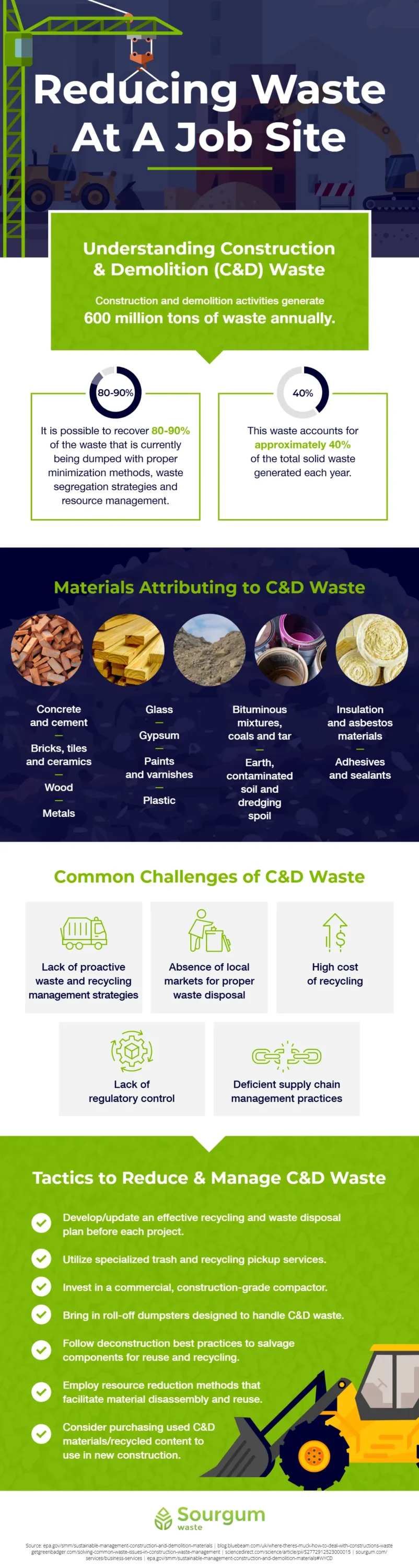

The construction and demolition (C&D) industry plays a vital role in global development, but it also contributes significantly to waste production. With C&D waste making up nearly 40% of total solid waste worldwide, finding sustainable ways to reduce it is essential for environmental and economic reasons.
One of the primary causes of excessive C&D waste is poor planning during the design phase. Inefficient material selection, frequent design changes, and improper storage practices contribute to unnecessary waste. Additionally, demolition methods that prioritize speed over sustainability often result in lost opportunities to reuse or recycle valuable materials.
A key strategy to minimize waste is to adopt a waste-conscious design approach. This includes selecting durable, sustainable materials, optimizing building dimensions to reduce excess cuts, and using prefabrication methods to limit on-site waste. Construction firms can also benefit from implementing advanced project management systems to improve material tracking and minimize overordering.
Another effective practice is to integrate deconstruction rather than traditional demolition. By carefully dismantling structures and salvaging materials like wood, metal, and concrete, companies can reduce landfill waste and repurpose resources for future projects. Similarly, partnering with local recycling facilities ensures that materials such as drywall, asphalt, and glass don’t go to waste.
On-site waste management solutions also make a significant difference. Using designated recycling bins, compactors, and roll-off dumpsters tailored for C&D waste improves efficiency while reducing environmental impact. Additionally, collaborating with waste haulers that specialize in C&D recycling helps ensure responsible disposal practices.
Beyond material efficiency, investing in education and training for construction crews on sustainable practices can lead to long-term improvements in waste management. Encouraging a culture of sustainability through clear guidelines, incentives, and accountability measures ensures that waste reduction efforts are consistently followed.
Technology also plays a crucial role in reducing waste. Innovations such as Building Information Modeling (BIM) software allow for precise planning, reducing material overuse and inefficiencies. Similarly, artificial intelligence (AI) is being used to analyze and predict waste patterns, helping companies proactively adjust their strategies for better sustainability.
By adopting these and other waste reduction measures, the industry can move toward more sustainable construction practices. To explore additional strategies for minimizing C&D waste, refer to the accompanying resource created by Sourgum Waste.