

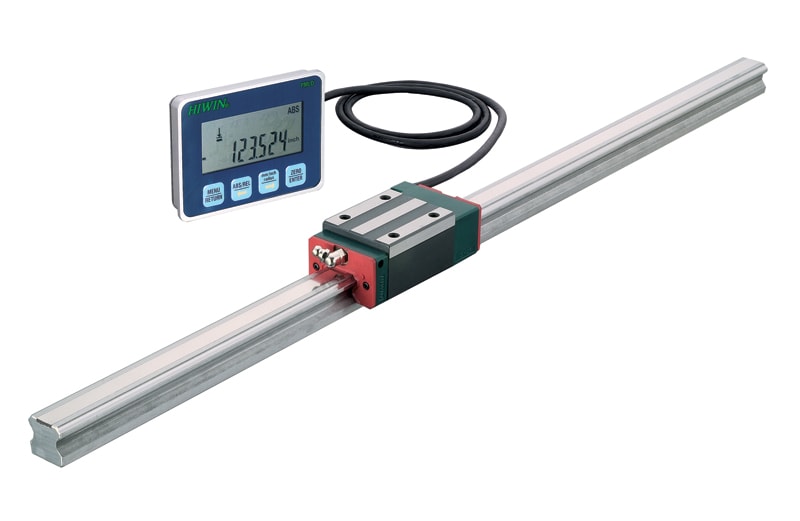
In the beverage business, time really is money. I manage a mid-sized bottling plant with five production lines—each dedicated to a different range of products. From carbonated sodas to sports drinks and sparkling water, our lines handle everything from 8 oz slim cans to full 2-liter bottles. We’re flexible, and that’s great for business, but it’s murder on efficiency.
Our biggest bottleneck has always been changeovers. When we switch from one bottle size to another, the entire line has to be adjusted—labelers, conveyors, cappers, sensors, and packers. Everything from height to width needs to be spot-on, or we risk alignment issues that can snowball into rejections, stoppages, or worse—an entire shift spent troubleshooting.
We’ve invested in quick-change tooling and added digital indicators where we can, but it never felt like enough. The real culprit was always the same: sloppy, inconsistent movement when repositioning critical equipment. The old linear guide rails we were using would bind, develop play over time, or flat-out fail to hold tight tolerances.
It became routine to have our techs spend 45 minutes manually re-aligning label heads or optical sensors, only to repeat the process during the next shift change. Even minor misalignment could throw our fill accuracy out of spec, or cause label misapplication that cost us in wasted product, downtime, and manual inspection hours.
It was during one of those frustrating weeks—a summer rush with four product swaps a day—when our lead engineer brought up the idea of switching to Hiwin linear guides. I hadn’t heard much about them at that point, but he explained that Hiwin components were being used in machine tools, CNC routers, and high-end automation applications where micrometer precision actually mattered.
I was skeptical. We’re not a semiconductor lab—we’re bottling flavored water. But he argued that the cost of rugged, high-precision linear guides would pay for itself if we could reduce downtime and speed up changeovers. The tipping point was when he pulled up a side-by-side video of our current guide’s performance next to a setup using Hiwin linear rails. The difference was night and day—smooth, consistent motion versus the unpredictable jerkiness of our existing rail systems.
So we tested it. We installed one pair of Hiwin linear guides on the support arms for our dual-head labeler on Line 3—the line with the highest changeover frequency. The mounting process was straightforward, and the guides came with preloaded bearings to eliminate lash. Once in place, we started to see benefits immediately.
No more wrenching things into position. Adjustments became a matter of turning a handle, sliding to the position, and locking in. The Hiwin rails offered smooth motion and repeatable accuracy, even after several cycles of use. Our technicians reported that they could reset the labeler position in less than half the time it took with the old setup.
More importantly, once the guides were in place, they stayed in place. We stopped seeing label drift. No more cap alignment issues from misplaced sensors. Our product rejects dropped, and QA was no longer flagging batches for rework due to simple mechanical misalignments.
We followed up with our supplier and specced out additional rails for our bottle guide systems and height-adjustable arms on the filling machine. With Hiwin’s range of sizes and load ratings, we were able to match each application without overbuying. The corrosion-resistant options were especially important, given our humid environment and regular sanitation cycles.
Over the course of the next two months, we retrofitted all five lines. The results were dramatic. Changeover times dropped by an average of 18%. We recovered more than 40 hours of lost production in just the first quarter after full installation. One particular day stood out—we had a triple-changeover on Line 2 and completed all adjustments in just under an hour, compared to nearly two and a half before the upgrade.
Another side effect? Morale. Our maintenance team was no longer dreading the process. What used to be a hands-on, elbow-grease task turned into a smooth transition, backed by components they could trust. That meant less frustration, fewer late nights, and more energy spent on continuous improvement.
Financially, the investment wasn’t massive, but the return has been. Between the reduced labor, fewer rejected bottles, and more uptime, we saw payback in under six months. That doesn’t even account for the wear and tear we avoided by eliminating repetitive adjustments and torque-based fixes that stressed our older brackets and hardware.
We also found the Hiwin documentation and support to be top-tier. Clear specs, easy integration, and no surprises. We’ve since started exploring other Hiwin components—ball screws, actuators—for future automation upgrades. The linear guides were just the beginning.
In the end, what convinced me wasn’t the technical specs—it was the simplicity. The guides did exactly what they were supposed to, every time. They didn’t need babying. They didn’t need adjusting. And they didn’t leave us guessing when precision mattered most.
If you’re in charge of a plant like mine—where changeovers are frequent, production runs are short, and every minute counts—take a hard look at your linear motion setup. It might seem like a small detail, but upgrading to high-quality, dependable components like Hiwin linear guides can have a massive ripple effect.
It certainly did for us. What used to be a source of constant interruption is now just part of the rhythm. Quiet, consistent, and predictable—just like a good production line should be.